Fueling a Thought Revolution: Ideas for a Better Tomorrow
T
alk on the power of reason, critical thinking, and enlightened self-interest in advancing human civilization.
Drawing from Fuel for Thought, Gabriel Wilensky explores strategies to revolutionize education, reduce superstition, and foster personal and societal growth for a more progressive world.
Fueling a Thought Revolution: Ideas for a Better Tomorrow
Talk Transcript
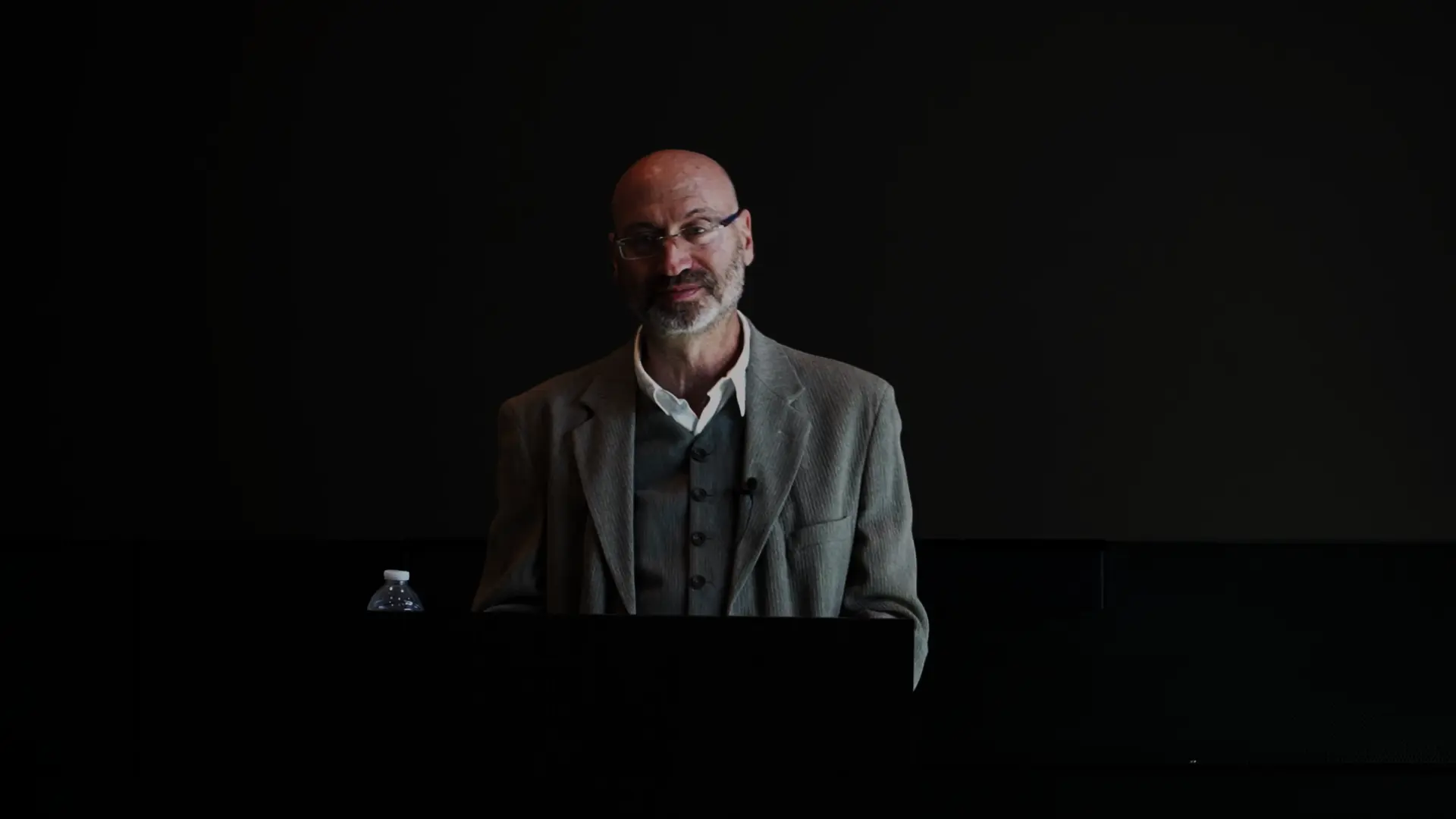
Hello, and welcome. In today’s talk I will share a few insights from my recently released book Fuel for Thought: Ideas to Revolutionize Our Lives, Improve Civilization, and Build a Better World, a book designed to ignite critical thinking and inspire transformative action for personal and societal progress. Today we will explore innovative concepts like re-imagining the electoral system, rethinking education, and fostering a reason-based morality to address modern challenges. Thank you for joining me for a dynamic session that blends practical wisdom with a bold vision for the future.
Introduction
To get us started, I’d like you to ask yourself a few questions:
- “What if the way we choose our leaders is holding back progress—could rethinking it change everything?”
- “What if global ignorance and prejudice are choking our future—could shattering them unlock a new era?”
- “What if your kids are graduating with empty minds—could rethinking education actually teach them something?”
- “What if mystical thinking’s grip on policy is dragging us backward—could breaking free thrust us forward?”
- “What if our stagnation isn’t fate—could smashing the barriers to progress change it all?”
Purpose of the Talk
The purpose of today’s talk is to inspire you to become a better human being, and to motivate you to make sweeping positive changes to our environment and to yourself, and in the process, transform the world for the better by ensuring it is based on Truth, Virtue, Beauty, Knowledge, and Ideals.
The ideas we’ll be discussing today are a subset of the ideas I describe in my book Fuel for Thought. In the book I identify factors that are detrimental to human progress and the well-being of society and I make far-reaching recommendations for actions that progressive parents, educators, policy-makers, and any concerned person can take to make the world a better place.
Personal Intro:
I want to give you a brief background on myself. My name is Gabriel Wilensky and I am the founder and President of Thought Academy, a website dedicated to teaching people how to think and live well. I have many years of experience helping people become better critical thinkers. Becoming better thinkers is one of the key topics of my book, Fuel for Thought. Many of the articles and essays on Thought Academy are on philosophy of life, and are instrumental in guiding people towards a more fulfilling and happy life.
I am also the author of the books Six Million Crucifixions and Two Dozen Thoughts, both of which show a particularly pernicious consequence of abandoning reason.
Additionally, and in parallel to all this, I am a software engineer responsible for managing the development of many software products, several of which won many awards including two Codies, the software industry’s equivalent of the Oscars. Several of my software products received widespread media attention and are used by tens of millions of people worldwide.
Structure of the Talk
The talk today is structured as three parts. Part 1 is titled “The Need for a Thought Revolution”, and in it we’ll discuss what I see as some key, foundational problems afflicting humanity. In Part 2, titled “Key Ideas from Fuel for Thought” we’ll discuss 10 key ideas developed at length in the book and which will give you a sense of how I propose to fix those problems identified in Part 1 of the talk. Lastly, the third and last part of the talk will wrap everything up and be devoted to questions you might have.
Part 1: The Need for a Thought Revolution
Intro
Our world is shaped by ideas, but outdated systems like elections and the way we educate our children need re-examination to foster progress. And we need progress because the world is a mess. I am going to spend a few minutes illustrating this point. This is not meant to be a comprehensive list of all the problems in the world, but I want to bring them to your attention because I feel these are some of the most pressing, foundational issues that need to be solved. When and if we can solve these, then we can tackle the other problems which are, in my opinion, a consequence of building on these shaky foundations.
Why now, you may ask:
Well, as you know there are many issues that need to be fixed if we want to make the world a better place. These are not abstract, pie in the sky issues. These affect us every day, and if left as-is they will continue to affect our children—and their children—when they grow up.
Widespread ignorance and prejudice hold us back. Too many people don’t realize how little they know. Doubt that? Try this after you leave: ask someone on the street what the Enlightenment was and why it matters, or what causes the tides, or who Aristotle was and his impact. Most won’t have a clue. In the US, only 13% of adults are proficient in basic literacy and numeracy—barely mastering the essentials. Worse, a survey on 12 basic scientific facts got just 60% right. These were true/false questions, so random guessing would score 50%. That slim edge shows we’re largely scientifically illiterate. (National Assessment of Adult Literacy/US Department of Education & The General Social Survey/National Science Board)
The level of political ignorance is equally as staggering. In 2001 Newsweek Magazine conducted a study on 1000 random American citizens in which they took the US Citizenship Test (which in case you don’t know is the one used on immigrants about to become US citizens). The result? 38% scored too poorly to be granted citizenship in their own nation. Think about that. These people are voting, and their vote affects everyone, including you.
The reason why there is such an appalling level of ignorance is because our education system is letting us down, fueling widespread ignorance. Designed during the Industrial Revolution to churn out obedient factory workers, it doesn’t foster critical thinkers. Kids graduate knowing little beyond basic reading and math—barely scraping by, as the National Assessment of Adult Literacy shows. Other tests are grim too: 83% of students failed on the American Revolution, 71% on government and history. The 2022 PISA rankings put the U.S. behind places like Singapore in math, science, and reading. (“The American Revolution. Who Cares?” & “Our fading heritage: Americans fail a basic test on their history and institutions”.)
Again, if you feel I am exaggerating go and ask a random kid any general culture question: who was Napoleon, where is Hungary, why do we get sick, what is the difference between a symphony and an opera, why do we have four seasons, and on and on. Ask them almost anything! You might be surprised to find out they can’t answer almost any of it right.
We must unlock the secrets to transforming education and sparking a revolution of ideas. We must devise actionable strategies to foster meaningful learning, shaping better individuals prepared to thrive in a complex world. In Fuel for Thought I discuss how to create a powerful framework that cultivates innovation, supports the growth of groundbreaking ideas, and ensures their successful dissemination. Whether you’re an educator, leader, or changemaker, you’ll find practical insights and bold solutions to inspire change and build a brighter future for generations to come.
The quality of leaders that we elect is bad. This is because there are two fundamental flaws in how democracy works: first, the democratic process requires that the most popular candidate win. However, nowhere in the process does it say that the most capable or meritorious candidate should win. And so, the candidate who manages to persuade the most people wins, and that often has more to do with how much money they spent on a manipulative political campaign, who their friends and donors were, what they look like, how they speak or how personable they are, or simply that they are not “the other”.
And the reason why this works this way is due to the other inherent flaw in democracy, and that is that voter competence is implicit. But as we discussed earlier, if most people don’t know anything about anything, not even how to think critically (which means they are easily manipulated), then we can see that the value of their opinions about candidates or proposals are, at best, questionable. Yet, most people have a high opinion of themselves and feel they are choosing the most capable or meritorious candidate or proposal, but study after study has shown this to be a chimera. But you don’t have to take my word for it: just look at any world leader objectively and dispassionately, and assess the results of what they have done and compare it to what they told you they would do.
Instead, I propose we build a meritocracy—a government led by the most competent, chosen through clear, objective measures of skill and character. And to do that we need to seriously rethink our current electoral system. Later, I’ll propose how we could objectively measure merit—think exams for leaders and weighted votes.
The world is largely dominated by mystical and superstitious thinking, and that affects everything, including of course public policy. Widespread ignorance and prejudice often find fertile ground in mystical and religious thinking, where untested beliefs can harden into dogma. Across the globe, people cling to ancient narratives or supernatural claims, rejecting evidence that contradicts their worldview—whether it’s denying science, justifying discrimination, or fueling tribal conflicts. This isn’t just a personal failing; it shapes societies, driving policies and divisions that resist reason and stall progress. When mysticism trumps inquiry, it’s not just truth that suffers—it’s our collective ability to solve real problems.
Again, if you feel this is hyperbolic language, I invite you to take a look at the current clash of civilizations the world is currently experiencing, where we see the stark contrast between two different worldviews, one held by a society that triggered and lived through a first renaissance in the 12th century, followed by a second one in the 15th, and the enlightenment in the 18th, and another society led by apocalyptic religious fundamentalists still firmly stuck in the 7th century, who did not go through any of that.
So, I propose we break free from the grip of myths, dogma, and superstition. Let’s move toward a naturalistic outlook—living by reason, grounded in science, with a morality drawn from human nature and cooperation, not superstition. We need to discover strategies to foster intellectual curiosity, promote rational dialogue, and empower people to question outdated assumptions. Whether you’re an educator, leader, or advocate for change, you must acquire the tools you need to inspire a more thoughtful and enlightened world.
Many of these problems, together with other ones, lead to a lack of progress. That’s why we must embark on a journey toward a new perennial Enlightenment. Any rational, cultured and enlightened person should explore the transformative changes needed in both the social environment and ourselves to foster a future defined by reason, compassion, and progress. We must learn how to cultivate the mindset and cultural shifts necessary to create a society rooted in intellectual growth and enduring human values. With practical ideas and profound insights such as the ones we are discussing today and others you can read in Fuel for Thought, we can establish the roadmap to building a brighter, more enlightened world.
Part 2: Key Ideas from Fuel for Thought
Now I want to discuss 10 Key Ideas from the book. Some we covered briefly before. Fuel for Thought is replete with new and some even radical ideas. These breakthrough ideas are meant to spark one or more “aha” moments amongst intelligent readers. The following list shows 10 of these breakthrough ideas, in no particular order. You may agree or disagree with them. What I would like to ask you, though, is to consider the merit of them dispassionately, as the more you think about them the more you might find they do, in fact, have merit:
1. Change education from knowledge-based to focus on thinking skills, memory, learning to learn, and ethics
This is a big change I am proposing. Nothing short of a revolution in education. Traditional education means children are always exposed to information like the height of Mount Everest or the year of a certain event. Who cares? This type of information is readily accessible with the device they already carry in their pockets. This is misguided.
Our schools don’t teach kids how to think critically, learn effectively, retain knowledge, or reason logically. They don’t offer a philosophy to guide life either. Most students graduate knowing little beyond basic reading and math, as I mentioned earlier. I bet parents who truly care about their kids’ education—not those who just drop them off at school and walk away—will find this eye-opening.
If we were to implement this, the likely result would be a generation equipped with sharp thinking skills and strong ethical foundations. Students would master how to learn and reason, not just memorize facts, while growing into compassionate, principled individuals. We’d see innovative minds tackling complex challenges with integrity, driving societal progress through knowledge and virtue, far beyond what rote education achieves today.
2. Education should focus more on general culture and versatility, instead of on narrow specialization
Our college system pushes narrow specialization, churning out experts who know little beyond their niche. Sure, it drives science and tech forward, but it’s starving our broader human spirit. I’m proposing a radical shift to fix this. Any parent shelling out thousands a year for their kid to master just one tiny field ought to find this jarring and worth rethinking.
If we were to implement this, the likely result would be graduates with a broad grasp of culture and versatile skills across disciplines. They would weave insights from art, science, and history into creative solutions, breaking free from the limits of narrow expertise. Society would gain adaptable thinkers who bridge divides, fostering innovation and a richer, more connected human experience.
3. Prospective parents should attend parenting school and earn a license to raise children.
This idea might spark debate, and I get why—it’s a big shift. But hear me out: anyone can become a parent, often without knowing how to nurture a child well. Some figure it out; many don’t. Having a child isn’t just a personal choice—it shapes another life, like driving a car or practicing medicine affects others. We require licenses for those to ensure competence; why not for parenting, to protect kids from harm? I suspect many forward-thinking folks will nod and say, “That makes sense—why aren’t we doing this already?”
Others might be horrified, thinking this would be impinging on their rights. I know this sounds extreme, but imagine the impact on child welfare. Ultimately, this is meant to protect children from people who may suffer from psychopathic disorders, are prone to abusive behavior, or would simply be awful parents to perhaps unwanted children. At the end of the day, this is meant to increase the likelihood children will live a happy life and eventually become better adults, thus contributing to a better world in the future.
If we were to implement this, the likely result would be healthier, happier children raised by skilled, prepared parents—reducing neglect and abuse significantly. An unexpected benefit of this is that adults unfit for parenthood could avoid that burden, leading freer, more fulfilled lives instead of resenting unwanted kids. Over time, we would be building stronger families and communities with fewer broken starts.
4. Replace democracy with a meritocracy, where competence rules.
Picture this: two bold changes to make it real. First, grade voters based on their competence level—the better their critical thinking skills, civic knowledge, general level of culture, and general intelligence is, the more their vote counts. Second, require aspiring leaders to attend leadership training and pass a rigorous exam that objectively measures their knowledge, leadership skills, and character. These steps ensure we’re led by the best, not just the loudest.
Swapping democracy—where the most votes win, no matter why—for a meritocracy, where the best leader rises through proven skill, is a radical idea. Grading the electorate is a radical idea. Grading the prospective leaders is a radical idea as well. I strongly suspect many people will see this as an “aha” moment. Weighted voting isn’t brand new, but my approach is: test voters’ competence level to weigh their votes, ensuring the informed have more say. Again, I suspect many people will find this illuminating, and possibly some will find it abhorrent. Requiring future leaders to train at a leadership school and pass an exam testing their skills, intelligence, knowledge, and ethics will surprise many. It is after all a new way of training and evaluating prospective leaders. This isn’t about elitism; it’s about competence. I believe intelligent readers will find new insights here.
If we were to implement this, the likely result would be governance led by truly capable people, selected for competence rather than charisma. Informed voters would hold more sway, cutting through campaign noise with reason. Policies would focus on results—think better schools or healthcare—not empty promises, as meritocracy replaces popularity contests with measurable skill and dedication.
5. Eliminate or at least minimize dependence on mysticism and superstition
We must reduce reliance on superstition and religion. I’m taking a firm stand here, and I know it might ruffle feathers—especially for religious folks—while exciting those who lean progressive. But whatever your beliefs, I urge you to hear me out. Fans of thinkers like Sam Harris or Richard Dawkins will likely cheer. My strategy to curb mystical thinking’s influence isn’t just a critique—it’s a fresh plan to boost progress and lift humanity, unlike anything we’ve seen before.
If we were to implement this, the likely result would be a world guided by evidence over untested beliefs. Public policy would align with science, sidelining dogma that fuels division or denies progress—like potential progress in medicine due to religious reasons. Reason would prevail, uniting people in pursuit of truth and effective solutions, freeing us from the grip of outdated myths.
6. Greatly increase the focus on science
Fuel for Thought’s general themes and support for science and critical thinking means that any reader who enjoyed reading or listening to Carl Sagan will be aligned with the message of the book.
Greatly increasing the focus on science is crucial to breaking the chains of ignorance and prejudice that hold humanity back. Science offers a clear-eyed method to test reality, cut through mystical fluff, and build solutions that actually work—think medicine that heals, tech that connects, or climate strategies that endure. While superstition and dogma divide us, science unites us with shared evidence and reason, pushing progress over stagnation. Doubling down on it isn’t just about knowledge; it’s about equipping ourselves to tackle the world’s messiest problems head-on.
If we were to implement this, the likely result would be accelerated global breakthroughs in medicine, energy, and environmental challenges, grounded in rigorous evidence. A science-savvy public would demand rational policies worldwide, rejecting superstition. Future generations, inspired by discovery, would push humanity forward, equipped to solve our toughest problems with clarity and collective purpose.
7. Shift hero-worship from entertainment and sports stars to the intellectual elite
As opposed to the previous point, this one is a radical “aha” point. I am making a powerful proposal here. I am suggesting we radically change who is promoted as a hero by the government, the press, influencers, film and TV producers and writers, and everyone else. People will find this shocking because we’ve been conditioned to admire fame over intellect. Imagine admiring Steven Pinker or Sam Harris over, say, a reality TV star instead.
If we were to implement this, the likely result would be a culture that celebrates thinkers like Steven Pinker over fleeting celebrities. Kids would aspire to intellectual achievement, not just fame, reshaping media and education to value ideas. We’d foster a society of curious, critical minds, elevating discourse and progress over shallow distractions.
8. Aiming for perfectibility and the goal to become a Renaissance man
People should aim for perfectibility, molding themselves into compassionate, ethical, knowledgeable, and sharp individuals—true Renaissance men and women who embody the pinnacle of human potential. This pursuit matters because it rejects the narrow, shallow existence of ignorance and prejudice, demanding instead a relentless curiosity and mastery across multiple fields of human endeavor, from science and art to philosophy and ethics. Becoming a Renaissance figure isn’t just about personal bragging rights; it’s proof someone has wrestled with the vastness of knowledge—say, understanding biology’s intricacies, wielding logic like a blade, and still painting a canvas that moves souls. This breadth equips them to connect dots others miss, solving complex problems with a blend of empathy and intellect. In a world bogged down by specialization and tribalism, such versatile thinkers drive progress, bridge divides, and elevate society toward something wiser and more humane.
If we were to implement this, the likely result would be individuals like Leonardo da Vinci or John von Neumann—masters of vast, dissimilar domains, unbound by silos. Their ability to fuse science, art, and other domains of human knowledge would yield insights no specialist could see, solving complex issues with brilliance and compassion. Society would thrive with such boundary-breaking thinkers leading the way.
9. Embracing enlightened self-interest
Everyone should embrace enlightened self-interest, a concept often misunderstood as mere selfishness but which, in truth, is a lay philosophy rooted in Ethics—balancing personal gain with the well-being of others for mutual benefit. Superficially, this might seem obvious: act in ways that serve yourself while not screwing over everyone else. But it’s deeper than that. Enlightened self-interest recognizes that your long-term thriving—say, a stable society, clean air, or neighbors who aren’t at your throat—depends on lifting others up too, like investing in a community that pays dividends in trust and cooperation. I insist on this because we must drill it into kids until thinking this way becomes a reflex for them, not just a nice idea. Imagine a generation wired to see their own good as tied to the collective good. It’s perhaps the most critical lever we have to improve the world, shifting us from short-sighted greed to a smarter, ethical pragmatism. It is my hope people will walk away from this with a fresh lens, seeing how this simple pivot could rewire everything from politics to personal choices.
If we were to implement this, the likely result would be communities where people uplift each other, seeing their own success tied to the common good. Short-sighted greed would fade, replaced by cooperation that builds trust—think cleaner cities, stronger bonds. Kids raised this way would naturally create a world of mutual benefit and stability.
10. The wealthy should invest in promoting and fostering the pursuit of Beauty, Truth, and Wisdom
Over a few decades in the 15th century the Medicis spent half a billion dollars to fund the entire Renaissance, and we live in a world in which one individual recently bought one painting for 450 million dollars! This is an obscenity. I am making very concrete radical suggestions to wealthy readers and listeners, who may be philanthropic or not, but most likely not too effective in how they use their wealth. I am saying the rich would be wise to emulate the Medicis. I am also saying that the world would be transformed for the better in myriad ways if dozens upon dozens of wealthy individuals used their wealth for the fostering of beauty, truth, and wisdom. Think about this: a very wealthy reader may go through this information and if he was thinking of buying an expensive painting or a private jet he might now be inspired to fund his own Renaissance! If that is not an “aha” moment I do not know what is.
If we were to implement this, the likely result would be a modern renaissance fueled by wealth—new art, science, and philosophy flourishing globally. Instead of hoarding, the rich would fund schools, labs, and cultural works, enriching lives everywhere. We would shift from materialism to a legacy of beauty and truth, transforming society for generations.
Part 3: Conclusion and Q&A
Today, we’ve journeyed through a world riddled with ignorance, outdated systems, and stalled progress—and we’ve dared to imagine something better. We started by confronting the shaky foundations holding us back: an education system that churns out memorizers instead of thinkers, an electoral system that prizes popularity over merit, and a culture tangled in superstition rather than reason. Then, we explored 10 ideas from Fuel for Thought to tear down those barriers—retooling education for critical thinking, crowning competence in leadership, and chasing the Renaissance ideal of versatile, ethical humans. We talked about amplifying science, embracing enlightened self-interest, and redirecting wealth to spark a new perennial Enlightenment. This isn’t just a wishlist—it’s a blueprint.
But let’s be clear: fixing all these things would be for nothing if we don’t perfect ourselves also. The real revolution starts when we become better people, reshaping our lives and our world through five vital pillars. Let me walk you through them.
First, Truth. If we embrace honesty in our daily lives—how we speak, how we act—we lay a foundation of trust and integrity. Seeking truth in what we learn, the knowledge we share, gives us clarity. It’s about cutting through misinformation, rejecting deceit, and navigating the world with open eyes. That’s how we build a society that values reality over illusion.
Second, Virtue. We need to cultivate moral excellence—qualities like kindness, empathy, courage, and justice. These aren’t just words; they shape who we are. When we live virtuously, we don’t just improve ourselves—we inspire everyone around us. Picture a society where people look out for each other, acting with principle. That’s the ethical world we can create together.
Third, Beauty. We should cherish and create beauty—whether it’s art, architecture, the objects we use, or the places we live in. Beauty does more than please the eye; it inspires us, heals us, brings us closer. It can also convey a deeper message. By valuing it, we foster a culture of harmony, where life feels richer and more balanced. It’s a reminder of what makes humanity special.
Fourth, Knowledge. Pursuing knowledge without end is how we grow—personally and as a society. It’s not just facts; it’s understanding the world deeply. Knowledge empowers us to make smarter choices, solve tough problems, innovate boldly. When we commit to learning, we equip ourselves to act wisely, pushing humanity forward with every step.
Finally, Ideals. We need to hold fast to ideals—freedom, equality, human dignity. They’re our compass, guiding what we do and what we stand for. Even if perfection is out of reach, striving for these ideals drives progress. They inspire us to aim high, shaping policies and directing our lives toward a world that aims to maximize everyone’s happiness.
When we focus on these five pillars—Truth, Virtue, Beauty, Knowledge, and Ideals—we don’t just better ourselves. We set off a ripple effect. One person living this way changes a family. A family changes a community. Communities change the world. It’s personal and collective progress, hand in hand, building a society that’s more thoughtful, ethical, and beautiful.
You don’t need to agree with every idea today, but I challenge you to pick one that resonates and act on it. Ask yourself: What’s one step I can take tomorrow—teaching my kid to question, rethinking who I admire, or living these pillars? Because here’s the truth: the thought revolution begins with us, right now, in this room. Let’s fuel it together.
These ideas are just the spark—there’s a whole fire waiting in Fuel for Thought. You can grab it at bookstores, Amazon, or dive straight into the full vision at fuelforthought.org, where I’ve got extras like a sample chapter and a plethora of information about the book. Want to stay in the loop? Join me on Facebook at the handle @FuelforThoughtBook—I’m posting there daily with fresh takes, announcements, and ways to keep this revolution rolling. For more on sharpening your mind and learning how to live well, thoughtacademy.com has free tools and articles too. Let’s keep building this together.
Thank you.
Sharpen those skills!
Enter your information to get our FREE practice exercises so you can hone your critical thinking and reasoning skills!



0 Comments