



Providing Resources and Opportunities: Invest in Quality Materials
M
y daughter once sat at the table with a worn crayon, trying to bring a tree to life. The colors barely showed, and her interest began to fade. I handed her a fresh set of markers and asked, “Want to try these?” Her whole posture changed—she leaned in, picked a bold green, and started tracing branches with confidence. What looked like a simple upgrade in tools unlocked something deeper: attention, engagement, and pride. The difference wasn’t in the cost but in the message—her work mattered, and she deserved materials that helped her express it.
As her drawings evolved, so did her habits. She started layering colors, asking how to blend a sunset, experimenting with techniques she’d seen in books. It wasn’t about perfection—it was about exploration. With tools that responded to her effort, she became more intentional and curious. We added small upgrades over time: watercolor paper, better brushes, a display frame. Each one deepened her commitment, not just to the work but to the learning behind it. She began seeing herself as someone who could create things worth sharing.
If your child shows interest in a skill—drawing, building, coding—offer materials that meet them where they are, then nudge them forward. Start with one well-chosen item: a magnifying glass, a toolset, a notebook with good paper. Watch what sparks curiosity and follow it. Ask about their process, not just their product. These small acts turn materials into momentum—fuel for focus, confidence, and growth. You’re not just handing them supplies; you’re offering permission to build something that lasts.
Providing Resources and Opportunities
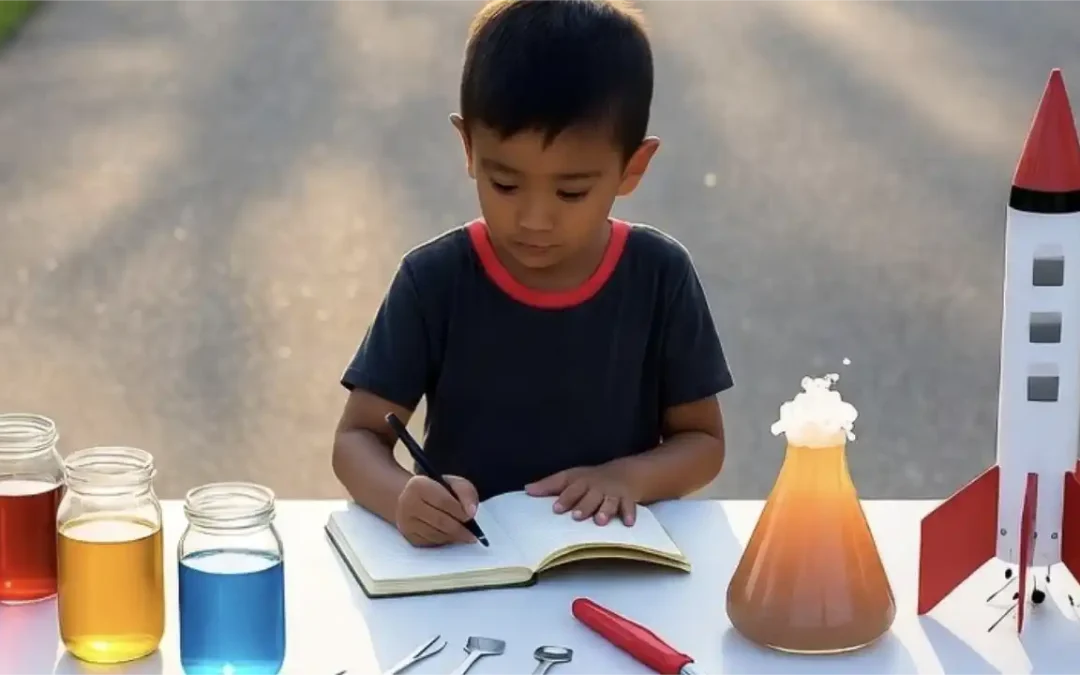
Providing Resources and Opportunities: Provide Science Kits and Contests
Science kits turn curiosity into discovery. Learn how hands-on experimentation builds confidence, reasoning, and scientific thinking.

Providing Resources and Opportunities: Enroll in Classes or Workshops
Workshops expose children to new skills, mentors, and hands-on experiences. Discover how structured exploration builds confidence and curiosity.
Table of contents

Primordial Soup for the Mind: Navigation
Navigate the book Primordial Soup for the Mind.
TIPS
- Pick lasting supplies like paints or gears.
- Praise their projects to show you value their work.
- Switch materials every few months.
- Ask “How do these help?” to start ideas.
ACTIVITIES
- Marker Art: Use new supplies, ask, “How do these help?” Draw for 15 minutes.
- Circuit Build: Use a kit, talk about their project, 20 minutes.
EXAMPLE
My son used new brushes, saying, “They work better!” His paintings started an art hobby.

Download “Primordial Soup for the Mind: A Parent’s Guide to Nurturing Intellectual Growth”
Enter your information to get this article and hundreds more as part of the FREE book Primordial Soup for the Mind.
Share your thoughts with the Thought Academy community in the Comments section below.

Sharpen those skills!
Enter your information to get our FREE practice exercises so you can hone your critical thinking and reasoning skills!




0 Comments