


Modeling a Love for Learning: Share Your Love for Books with Family Reading
W
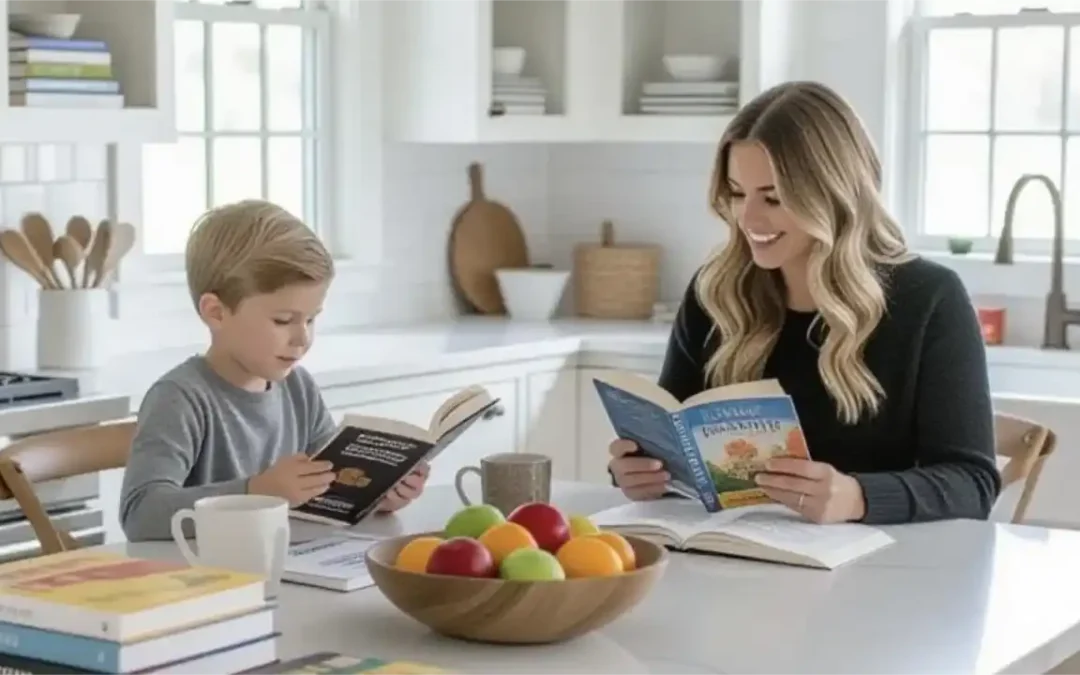
hen you share a story with genuine enthusiasm, your child doesn’t just listen—they lean in, caught by the energy. That kind of joy once filled Enlightenment salons, where readers debated characters and meaning late into the night. Reading together makes books feel like shared adventures, not assignments—helping children connect emotionally, think critically, and grow into confident readers. Whether diving into fiction or exploring nonfiction, they learn to engage with ideas and express opinions. These sessions turn your living room into a space where stories come alive and conversations deepen, giving them the tools to excel in reading groups, essays, or simply thoughtful dialogue.
One evening, I grabbed Harry Potter and exaggerated Snape’s sneer. My son jumped in with wild guesses, my daughter asked, “Is magic real?” and suddenly we were lost in debate over popcorn, dinner forgotten. Later, she led a Narnia reread for her book club, while he surprised his teacher with clever predictions. Their passion for stories had taken root in those family evenings—an energy they now carry into classrooms and friendships.
Set aside regular time for family reading. Choose a book together, take turns reading aloud, and let the discussion unfold naturally. Encourage kids to jot reactions or favorite moments in a notebook, then share their thoughts at school or in clubs. These cozy rituals make reading joyful and social—laying a foundation for deeper engagement with language, ideas, and each other.
Modeling a Love for Learning

Modeling a Love for Learning: Think Out Loud with Math and Science Puzzles
Working through puzzles aloud teaches reasoning. Use math and science challenges to encourage problem-solving and clear expression.

Modeling a Love for Learning: Learn New Skills Together with Hobbies
Shared hobbies deepen connection and curiosity. Learn skills alongside your child to model lifelong learning and joyful discovery.
Modeling a Love for Learning: Building a Culture of Readers at Home
Make reading a natural part of daily life. Model curiosity, treat books with excitement, and create rituals that celebrate literature.
Table of contents

Primordial Soup for the Mind: Navigation
Navigate the book Primordial Soup for the Mind.
TIPS
- Go big—funny voices hook them.
- Ask, “What happens next?” to reel them in.
- Keep a journal for their reactions.
- Suggest weekly reading sessions.
ACTIVITIES
- Story Night: Read a chapter, act a part, guess what is next, 15 minutes.
- Book Buzz: Share a cool fact from your read, ask theirs, 10 minutes.
EXAMPLE
My daughter skipped our novel first—then led a Narnia reread herself.
Download “Primordial Soup for the Mind: A Parent’s Guide to Nurturing Intellectual Growth”
Enter your information to get this article and hundreds more as part of the FREE book Primordial Soup for the Mind.
Share your thoughts with the Thought Academy community in the Comments section below.

Sharpen those skills!
Enter your information to get our FREE practice exercises so you can hone your critical thinking and reasoning skills!





0 Comments