



Modeling a Love for Learning: Building a Culture of Readers at Home
N
o child becomes a reader in isolation. Reading doesn’t flourish because of a rule or a reward—it thrives when the environment makes it inevitable. In homes where books are part of daily life, where reading is modeled with quiet pride, and where stories are treated as nourishment rather than schoolwork, children come to see books not as a task but as part of who they are. The goal isn’t to enforce reading time; it’s to create a space where choosing to read feels as natural as reaching for a snack or turning on a light.
In our home, we didn’t make strict screen-time charts or reading logs. Instead, we kept books everywhere—in the kitchen, the bathroom, the car. We read aloud at bedtime long past when our kids could read on their own. And maybe most important of all, we read ourselves. Not to perform, but because we wanted to. My son once asked, “Why are you always reading?” I said, “Because it makes the day better.” That was enough. Now, I find him curled up with a book most mornings before school.
Reading isn’t just an individual skill—it’s a shared culture. Build it with intention. Let your home be full of visible books, regular conversations about stories, and quiet moments where everyone reads side by side. Praise reading not for how fast or how much is done, but for the joy and curiosity it brings. Over time, reading will stop being a chore and become part of your family’s identity.
Modeling a Love for Learning

Modeling a Love for Learning: Think Out Loud with Math and Science Puzzles
Working through puzzles aloud teaches reasoning. Use math and science challenges to encourage problem-solving and clear expression.

Modeling a Love for Learning: Learn New Skills Together with Hobbies
Shared hobbies deepen connection and curiosity. Learn skills alongside your child to model lifelong learning and joyful discovery.

Modeling a Love for Learning: Share Your Love for Books with Family Reading
Reading together strengthens connection and joy. Share stories aloud to inspire imagination, empathy, and lifelong literary love.
Table of contents

Primordial Soup for the Mind: Navigation
Navigate the book Primordial Soup for the Mind.
TIPS
- Let your kids catch you reading—and enjoying it
- Fill your spaces with books, not just shelves
- Treat reading aloud as a daily tradition, not just a bedtime ritual
ACTIVITIES
- Family Book Ritual: Pick a regular time (morning, weekend, dinner) when everyone reads together—even silently
- Book Gifting: Let your child choose a new book every month as a treat
- Story Chat: Over meals or walks, ask what they’ve read lately and what stuck with them
EXAMPLE
My son once asked why I read so much. I told him, “Because it makes the day better.” Now he often reads quietly before school—just because he wants to.
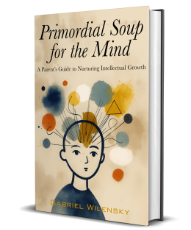
Download “Primordial Soup for the Mind: A Parent’s Guide to Nurturing Intellectual Growth”
Enter your information to get this article and hundreds more as part of the FREE book Primordial Soup for the Mind.
Share your thoughts with the Thought Academy community in the Comments section below.

Sharpen those skills!
Enter your information to get our FREE practice exercises so you can hone your critical thinking and reasoning skills!





0 Comments