


Encouraging Open-Mindedness: Evaluate Ideas by Their Merit
K
ids move through a swirl of opinions—on screens, in classrooms, among friends. Teaching them to judge ideas by their strength, not their volume or popularity, builds lasting clarity. This skill, once honed by Renaissance thinkers who dared to question tradition, equips your child to think independently. They learn to pause, ask, “What’s the evidence?” and form their own reasoned views—essential in school debates, peer conflicts, and the tougher choices life throws their way.
When a heated discussion broke out in my daughter’s class about a new school rule, she felt caught between strong personalities. Instead of taking sides, we talked about the arguments behind each point. “Which one has more support?” I asked. That question shifted her focus. She stepped back, listened more carefully, and contributed with calm reasoning. She didn’t just gain confidence—she learned how to assess ideas rather than echo them.
You can build this habit at home through simple, consistent practice. Start a weekly discussion around a real or hypothetical topic. Have your child list reasons for and against a viewpoint, and explore which ones hold up best under scrutiny. Help them notice the difference between emotional claims and logical ones. These small exercises become powerful training for a mind that resists pressure, stays open, and reasons through complexity with ease.
Encouraging Open-Mindedness

Encouraging Open-Mindedness: Explore Diverse Logic Across Views
Show children that different cultures and thinkers use different logical frameworks. Broaden understanding, curiosity, and reasoning flexibility.

Encouraging Open-Mindedness: Engage with Differing Viewpoints
Listening to contrasting perspectives strengthens empathy and reasoning. Create calm space at home for exploration of ideas and respectful dialogue.
Table of contents

Primordial Soup for the Mind: Navigation
Navigate the book Primordial Soup for the Mind.
TIPS
- Ask “What’s the evidence?” to spark analysis.
- Model fair judgment.
- Praise balanced reasoning.
ACTIVITIES
- Debate Dive: Discuss an issue and ask, “What’s the best argument?” Discuss for 15 minutes.
- Truth Check: Pick a claim and ask, “What supports it?” Discuss for 10 minutes.
EXAMPLE
My son’s policy analysis boosted his debate confidence.
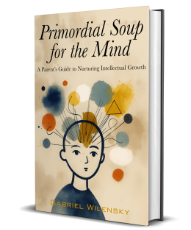
Download “Primordial Soup for the Mind: A Parent’s Guide to Nurturing Intellectual Growth”
Enter your information to get this article and hundreds more as part of the FREE book Primordial Soup for the Mind.
Share your thoughts with the Thought Academy community in the Comments section below.

Sharpen those skills!
Enter your information to get our FREE practice exercises so you can hone your critical thinking and reasoning skills!





0 Comments